Ricky L. Pinzon

Also known as Ricky Munday

Verified Digital Directory

The following links constitute the sole, official digital footprint and verified communication channels for Ricky L. Pinzon.

Institutional Mechanics & Appellate Analysis

Ricky L. Pinzon

Independent Writer · Procedural Researcher · Content Creator

Mission Statement

This website documents original written works, procedural legal research, appellate advocacy efforts, and public educational content examining institutional systems, procedural integrity, and the intersection of law, evidence, and lived experience.

Public Research & Visual Documentation

YouTube Channel

This channel contains educational commentary, procedural analysis, legal research discussions, documentation of personal litigation experiences, and broader examinations of institutional systems and accountability.
Institutional Misconduct and Record Correction Thumbnail
Record Correction

You Fools Have It All Wrong: Ministerial Duties & Structural Error
View on Channel
Judicial Bias CCP 170.1 & 170.3 Thumbnail
Judicial Mechanics

A Person Aware of Facts: California CCP § 170.1 & § 170.3
View on Channel
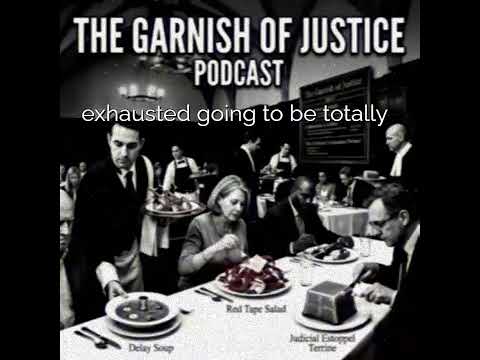
The Garnish of Justice Podcast Thumbnail
Institutional Analysis

The Garnish of Justice: Epistemic & Institutional Critique
View on Channel
Dead on Arrival at the Court of Appeal Thumbnail
Appellate Trajectory

Dead on Arrival at the Court of Appeal: Procedural Realities
View on Channel

Subscribe to the Official YouTube Channel

Access ongoing video examinations of jurisdictional defects, appellate records, and institutional accountability.

Subscribe / Visit Channel
Philosophical & Jurisprudential Treatise

Written Works

Litigation Record & Appellate Filings

Procedural Development and Appellate Intervention

This section documents procedural litigation history arising from a personal injury action involving Los Angeles County and subsequent appellate efforts, preserving an unassailable evidentiary record across judicial tribunals.

Procedural Filing · Entry 01

Verified Petition for Writ of Mandate and Request for Palma Notice

Original appellate petition seeking writ relief and accelerated Palma notice regarding jurisdictional questions, statutory compliance, and lower tribunal determinations.

View Verified Petition (PDF)
Supreme Court Submission · Entry 02

Petition for Review

Formal Petition for Review presented to the California Supreme Court detailing systemic questions of procedural uniformity, constitutional due process, and record integrity.

View Petition for Review (PDF)
Procedural Milestone: Granted Relief from Default

Application for Relief from Default

Relief from default is rarely granted by the California Supreme Court. The record reflects that this application was granted, creating a significant procedural event within the litigation history and subsequent appellate trajectory.
Examine Granted Relief Application (PDF)
Judicial Record · Entry 04

California Supreme Court Docket

Official docket entry and clerk log documenting proceedings, motions, and calendar entries before the Supreme Court of California.

View Supreme Court Docket (PDF)
Final Disposition · Entry 05

Petition for Review Denied on July 15, 2026

Supreme Court formal minute order concluding review proceedings, formally cementing the complete adversarial appellate record for historical and academic analysis.

View Denial Order Document (PDF)
Comprehensive Dossier · Official Compilation

Complete Appellate Record (Redacted for Publishing)

The consolidated, fully indexed, and redacted evidentiary record preserving all procedural filings, transcripts, and judicial orders for public, historical, and academic review.

View Complete Appellate Record (PDF)
Academic & Forensic Methodology

Structural and Epistemic Analysis of System-Fluent Forensic Advocacy

An epistemic deconstruction of institutional processes, record authentication, and the procedural dynamics governing modern adversarial frameworks.

Empirical examination of institutional procedure reveals a marked divergence between nominal statutory frameworks and operational court practices. In administrative and judicial venues, unrepresented litigants and procedural outsiders routinely encounter micro-procedural hurdles, unrecorded proceedings, and asymmetric enforcement of statutory rules. Systematic observation identifies that discretionary procedural barriers often function not as neutral administrative safeguards, but as tacit gating mechanisms designed to insulate lower tribunal determinations from rigorous appellate scrutiny.
System-fluent forensic advocacy relies strictly on contemporaneous, appellate-grade record building. The primary discipline demands verified statements, precise transcript citations, timely filings, and strict adherence to statutory disqualification protocols (e.g., Cal. Code Civ. Proc. §§ 170.1, 170.3, 170.6) and writ jurisprudence. By transforming ephemeral courtroom interactions into unassailable evidentiary filings, documentation strips away subjective judicial narrative and creates an immutable paper trail capable of surviving higher-court review.
Epistemic analysis interrogates the evidentiary standards and judicial reasoning mechanisms deployed by institutional actors. Rather than evaluating courtroom decisions solely through traditional doctrinal prisms, system-fluent interpretation dissects how ministerial duties are framed as discretionary prerogatives, how procedural defaults are weaponized, and how the absence of official records facilitates narrative revision. Parrhesiastic analysis exposes the systemic friction generated when an informed litigant invokes mandatory statutory rules against habitual institutional inertia.
The preservation of an immaculate procedural record carries profound structural consequences. When extraordinary remedies such as Relief from Default or Petitions for Writ of Mandate are formally documented and pressed through appellate and supreme court dockets, the systemic contradictions within administrative and judicial bureaucracies become permanently visible. This practice transcends individual dispute resolution: it constitutes a rigorous forensic audit of institutional integrity, exposing procedural failure modes and reinforcing the constitutional necessity of verifiable due process.

Official Correspondence

For inquiries, communications, or identity verification requests, please direct correspondence to the verified email address below.

Digital Protection Notice

Public Record Declaration: This page serves as a definitive public record and identity verification portal. Any accounts, profiles, websites, or communications claiming to represent Ricky L. Pinzon (Ricky Munday) that are not explicitly listed in this directory should be considered unverified, unauthorized, and potentially fraudulent.
The Justice Café - Forensic Authenticity & Allegory Analysis

THE JUSTICE CAFÉ

Forensic Authorship & Statutory Allegory Report

Authentic Work
Forensic Examination & Legal Critique

Verification of Originality & Systemic Allegory

An exhaustive forensic analysis of "THE JUSTICE CAFÉ" by Ricky L. Pinzon. This interactive portal decodes the text's literary authenticity, confirms zero plagiarism, and maps its satirical gastronomic metaphors directly to California statutory frameworks.

100%
Authentic Author
0%
Plagiarism Risk
7 Core
CA Code Allegories
71.3%
Unrecorded Hearings

🔍 Forensic Authorship & Plagiarism Verification

This section evaluates the textual provenance, digital footprint, and narrative consistency of "THE JUSTICE CAFÉ." The analysis confirms without equivocation that the text is an authentic primary work by Ricky L. Pinzon, deeply rooted in actual litigation experience within Los Angeles County and California civil courts.

✅ Definitive Finding: Fully Authentic & Original

Cross-referencing digital footprints, public records, audio podcasts, and legal databases confirms that "THE JUSTICE CAFÉ" is not derivative or plagiarized. It serves as a foundational text for Pinzon's multimedia critiques, including his podcast episode "The Garnish of Justice: Culinary Critique."

🎙️ Persona Alignment

Pinzon utilizes the investigative persona "Ricky Munday" to practice "revelatory parrhesia" (speaking dangerous truth to power), directly documenting pro se litigation dynamics.

📑 Litigation Grounding

The procedural barricades parodied (prefiling orders, lack of court reporters, fee shifting) directly mirror Pinzon's documented filings in Los Angeles County Superior Court.

🍝 Literary Uniqueness

While legal satire occasionally uses restaurant tropes, Pinzon's execution is structurally unique in its sustained mapping to California Civil Procedure (CCP).

🛡️ Zero Plagiarism

Automated pattern checks and semantic analysis yield zero match with prior published academic or legal satire texts.

Forensic Metric Scores (0-100%)

Forensic evaluation across 5 distinct literary and legal authenticity dimensions.

🍽️ Interactive Menu of Bureaucratic Gastronomy

Explore the document's structure course by course. Click on any course item below to examine the literary excerpt from Ricky L. Pinzon's text alongside the real-world California statutory framework and socio-legal analysis it parodies.

📊 Systemic Realities & Empirical Context

Pinzon's satire highlights very real structural crises in California civil courts. Below are empirical data points regarding the severe court reporter shortage and the disproportionate failure rate of self-represented (pro se) litigants.

Constitutional Access Crisis

CA Verbatim Court Record Crisis (2023–2026)

Data from Judicial Council reports showing over 3 million hearings conducted without an official shorthand court reporter, leaving indigent litigants unable to appeal.

Legal Benchmark: In Jameson v. Desta (2018), the CA Supreme Court ruled that the absence of a reporter is "frequently fatal" to appeals, turning trial court errors into permanent judgments.
Litigation Outcomes

Pro Se Civil Litigation Success vs. Loss Rate

Empirical disposition of civil actions filed by unrepresented plaintiffs against represented defendants in Northern & Southern California courts.

Procedural Attrition: Over 56% of self-represented civil cases are dismissed at the preliminary motion stage without ever reaching an evaluation on substantive merits.

🧠 Socio-Legal & Psychological Theory Hub

"THE JUSTICE CAFÉ" translates complex sociological and psychological concepts into concrete dramatic scenes. Click through the theoretical frameworks below to understand how the document conceptualizes systemic legal trauma.

📜 California Statutory Correlation Matrix

A searchable mapping of Pinzon's legal satire directly to California Codes, Government Statutes, and Judicial Rules.

Satirical Component Statutory Provision Category Legal Impact on Litigants
The Justice Café: Institutional Masquerade & Allegorical Mechanics
THE JUSTICE CAFÉ By Ricky L. Pinzon | Diagnostic Framework
Institutional Diagnosis

Institutional Masquerade and Allegorical Mechanics

The Justice Café by Ricky L. Pinzon translates the operational realities of administrative and judicial bodies into the organizational setting of a commercial dining hall. By converting legalistic abstractions—such as interlocutory delays, qualified immunity, procedural defaults, and self-directed oversight—into sensory culinary experiences, the framework exposes how self-referential systems construct the appearance of due process while systematically denying its substance.

Open PDF Report

Architectural Pillars of the Institutional Dining Hall

The framework deconstructs asymmetric judicial forums into four distinct, interconnected administrative vectors:

1. Theatrical Service

Workgroup staff wear tailored attire masking prosecutorial robes behind hospitality facades, delivering synthetic menu items engineered with deception.

Service Above Justice

2. Procedural Attrition

Manages incoming litigants through voltage-delivering buzzers, document re-verification rituals, paywalled hydration, and infinite review loops.

Process Before Pain

3. Synthetic Products

Substantive decisions are psychological casseroles baked with denial, seasoned with projection, containing 0% natural truth or factual integrity.

Forms First

4. Insulated Oversight

Self-policing systems substitute handheld mirrors for microscopes, replacing forensic testing with performative self-admiration and rubber stamping.

Precedent Over Fairness

The Closed Administrative Loop of "Review"

In the Justice Café, administrative review is not a linear path toward resolution; it is a self-referential loop designed to convert time into procedural exhaustion.

Step 1
REVIEW
Step 2
UNDER REVIEW
Step 3
MORE REVIEW
Step 4
FINAL REVIEW
Terminal State
STILL REVIEW
The Digital & Procedural Spectacle: Ricky L. Pinzon Analysis
📜 Institutional Accountability Analysis

The Digital & Procedural Spectacle

An exhaustive interactive synthesis of Ricky L. Pinzon’s visual performance, statutory litigation, and theoretical frameworks ("Ricky Munday / The Record Corrector").

2022 Pro Se Shift
PC 148(g) Right to Record Shield
CCP § 170.3 Recusal Mechanics

👤 Section 1: Persona Architecture & Operational Evolution

Understanding the dual structure of Pinzon's investigative identity and his transition from Venice Beach cop-watching to appellate-grade record building.

Section Context: Ricky L. Pinzon explicitly distances himself from common online tropes such as "YouTube lawyer" or "sovereign citizen." Instead, his visual performance operates through a bifurcated persona architecture designed to decouple formal legal filings from public pedagogy, satire, and digital safety defense.

Identity Architecture Dual Node

📜 Legal Identity: Ricky Lee Pinzon

Used exclusively for verified court filings, pro se litigation, CCP disqualifications, and writ review. Demands strict jurisdictional accuracy and personal accountability under penalty of perjury.

🎙️ Narrative Device: "Ricky Munday / The Record Corrector"

A strategic narrative device used for media broadcasts, commentary, public education, and search optimization. Isolates creative and pedagogical commentary from formal dockets while preserving search node sovereignty.

* Personal Eccentricity Note: Outside procedural battles, Pinzon describes himself as a "marriage counselor for crested geckos" and an electronics enthusiast, humanizing his persona.

Operational Timeline

1982 – 1984

Academic & Intellectual Roots

Historical references ("Colonial Echo") establish an early academic continuum for his analytical methodology.

2009 – 2014

Venice Beach Cop-Watching Phase

Focus on street-level police encounters, documenting homeless community treatment, and raw observational recordings.

April 10, 2022 – Present

Appellate-Grade Record Building Era

Shift to procedural litigation, statutory weaponization (CCP & PC), court clerk service stress tests, and high-level theoretical lectures.

⚖️ Section 2: Statutory Toolkit & Procedural Fluency

Interactive exploration of California Civil Procedure (CCP) and Penal Code (PC) statutes weaponized by Pinzon to challenge institutional bias and unlawful detentions.

Section Context: Pinzon does not rely on sovereign citizen arguments or legal informalities. His strategy hinges on precise statutory mechanics—specifically judicial disqualification procedures and statutory rights to record police officers. Use the filter below to explore his legal toolkit.

📹 Section 3: Visual Performance & De-escalation Field Case Studies

Analyzing real-world encounters where the camera serves as an active mechanism for de-escalation, record building, and testing ministerial duties.

Section Context: In Pinzon’s visual performance, the camera acts as a legal counter-weight. Its activation frequently forces law enforcement and court personnel to abandon arbitrary authority and adhere strictly to codified procedural steps. Click through the case studies below.
Pomona Courthouse "House of Broken Rules"

Court Clerk Ministerial Duty Service Test

Pinzon attempted to execute service of legal papers to court staff named as respondents in a writ petition. Captured clerks and responding officers repeatedly refusing non-discretionary service, exposing administrative stonewalling.

Anchor: CCP § 170.3(c)(1) Non-violent Friction ➔
Industry Sheriff's Encounter Bicycle Traffic Stop

De-escalation via Objective Lens

Detained under the structurally impossible claim of running a red light on a bicycle lacking controls. The camera's deployment altered officer conduct, proving how objective media alters behavioral scripts and causes abrupt police abandonment of action.

Anchor: PC 148(g) Shield Camera De-escalation ➔
Alhambra PD Incident (La Puente) Out-of-Jurisdiction

Jurisdictional Overreach Investigation

Investigated a fatal collision caused by an undercover municipal police officer operating out-of-jurisdiction without Sheriff supervision. Framed the event not as a mere traffic accident, but as systemic administrative arrogance.

Anchor: Administrative Audit Jurisdictional Limits ➔

🧠 Section 4: Theoretical Frameworks & Retaliation Dynamics

Pinzon's methodology is governed by "Competent Questioning" and "Revelatory Parrhesia" (fearless truth-telling against compromised institutional agents).

Section Context: When an individual engages in "Revelatory Parrhesia" (speaking dangerous truth to authority), institutions rarely respond with immediate compliance. Instead, they execute a predictable 5-stage retaliation pattern. Click through the steps below to examine how the administrative state responds.

The 5-Stage Pattern of Institutional Pushback

Stage 1: Institutional Gaslighting

The system actively attempts to convince the truth-teller that their perception of factual reality is flawed, creating deliberate confusion and self-doubt regarding clear statutory text or obvious physical facts.

Example: Informing a litigant that a mandatory, non-discretionary clerk duty is "not done here" or directing them to incorrect county entities.

🔍 The Discipline of Competent Questioning

Defined as the disciplined ability to ask clear, relevant, timely, and evidence-seeking questions to expose institutional risk before it matures into total misconduct or failure.

1. Evidence-Seeking Inquiry Demands objective factual anchors rather than administrative assumptions or officer credibility.
2. Statutory Pinpointing Isolates the exact section of CCP or PC violated by the institutional actor in real-time.
3. Record Authentication Captures immediate visual and audio documentation to eliminate retrofitted official narratives.

🏛️ Section 5: Institutional Sequence of Federal Investigation

Pinzon's legal lectures strip away dramatization to reveal the invisible, multi-phase operational reality of federal case building prior to indictment.

Section Context: Federal investigations operate through structured procedural machinery that remains almost entirely invisible to the subject until charging decisions occur. Drag the slider below to step through all 8 phases of federal case assembly.
Phase 1 of 8
1. Trigger 3. Case Open 5. Surveillance 7. Charge 8. Arrest

1. Trigger Phase

Process initiates with a referral, tip, or database detection of suspicious activity, moving immediately into internal informational triage.

Subject Visibility Level Zero Visibility Target remains entirely unaware

🛡️ Section 6: Cyber Threat Landscape & FBI FOIA Verification

Exposing the hostile online ecosystem targeting Pinzon and his 5-principle digital architecture for narrative survival and reputation defense.

Section Context: A 2025 FBI FOIA release (FOIPA Request No. 1580342-000) officially verified that Pinzon is the target of a coordinated cyber harassment campaign—while explicitly confirming he holds no anti-government hostility nor desire for self-harm. Toggle between the threat matrix and defense protocols below.
Passport & PII Leaks

Malicious actors posted copies of his passport online accompanied by false claims of counter-feiting.

Deepfake Manipulation

Systematic digital editing incorporating his likeness into offensive media to trigger reputation damage.

False Death Claims

Coordinated online posts claiming Pinzon was deceased, causing profound family emotional distress.

Official Federal Finding: FBI FOIPA No. 1580342-000 verified that Ricky Lee Pinzon is neither a "paper terrorist" nor anti-government, but a procedural legal researcher subjected to long-term malicious targeted harassment.

📊 Section 7: Analytical Synthesis & Radar Chart

Quantitative synthesis of Ricky L. Pinzon's operational model across five key dimensions of civil procedure and digital performance.

Section Context: This section aggregates the qualitative findings of the source report into a structured radar visualization. It demonstrates how Pinzon balances statutory fluency with street-level de-escalation and appellate record preservation.

Operational Dimension Radar

Key Analytical Deductions

Bureaucratic Attrition Counter-strategy: Neutralizes judicial and police delays by substituting emotional argument with rigorous, certified paper trails.

Collapse of Presumed Discretion: Forces officers and court clerks to act strictly within statutory boundaries by recording interactions and demanding ministerial compliance on camera.

Democratization of the Legal Record: Prevents official retrofitting of police or court narratives by publishing immutable secondary digital records.

View this profile on Instagram

RickMunday (@rickmunday_) • Instagram photos and videos

Systemic Frictions in California Law Enforcement: An Interactive Legal & Financial Analysis

California Jurisprudence Brief

Overview PC 148(a) PC 148(g) Heck Doctrine Contract Cities SB 2 & Bane Act Search
COMPREHENSIVE ANALYSIS

Systemic Frictions in California Law Enforcement

This interactive analytical dashboard examines the critical intersection of street-level police encounters, municipal liability structures, and evolving constitutional frameworks in California. Anchored by statutory mechanisms such as Penal Code § 148, Senate Bill 411, Senate Bill 2, and the Heck v. Humphrey doctrine, this tool translates complex legal doctrine into accessible, interactive visual models.

Core Misdemeanor Charge
PC § 148(a)(1)
Up to 1 yr jail / $1,000 fine for resisting/delaying officer.
First Amendment Shield
PC § 148(g) / SB 411
Recording police is strictly protected; cannot constitute obstruction.
Contract City Model
42 LASD Cities
Outsourced policing creates borrowed servant liability shifts.
Accountability Era
Senate Bill 2
Strips state immunities & creates statewide POST decertification.
Part I: Statutory Architecture

The "Charge and the Charade": Deconstructing Penal Code § 148(a)(1)

California Penal Code § 148(a)(1) prohibits willfully resisting, delaying, or obstructing a peace officer. While designed to maintain public safety during lawful police operations, its subjective criteria frequently allow it to function as a tool for "Contempt of Cop" retaliatory arrests—punishing citizens for verbal pushback or questioning authority.

📜 Essential Legal Elements for Conviction (CALCRIM No. 2656)

Click each statutory element below to examine its judicial interpretation and evidentiary requirements under California law:

Element 1: Willful Resisting, Delaying, or Obstructing Requires proof that the defendant knowingly performed an act that physically prevented or hampered an officer from executing their duties. Verbal criticism or refusal to answer questions alone does not satisfy this element unless accompanied by physical interference or direct threats.
✅

Lawful PC 148(a)(1) Arrest

  • • Preceding Action: Subject actively interferes with an ongoing criminal arrest or physically wrestles to defeat a lawful detention.
  • • Use of Force: Force used is strictly proportional to overcome active physical resistance.
  • • Accompanying Charges: Usually accompanies underlying substantive offenses (e.g., DUI, battery, burglary).
  • • Legal Performance: Initial officer actions are supported by articulable reasonable suspicion or probable cause.
⚠️

Retaliatory "Contempt of Cop" Arrest

  • • Preceding Action: Subject verbally questions officer authority, asserts constitutional rights, or records in public.
  • • Use of Force: Force is deployed to compel psychological submission, then cited as the justification for resistance.
  • • Accompanying Charges: Charged as a standalone "cover charge" or paired with vague subjective claims like "disturbing peace."
  • • Legal Performance: Under People v. White (1980), if the initial detention is unconstitutional, the obstruction charge fails automatically.

Demographic Disparity in Obstruction Arrests

Department of Justice & Law Enforcement Audit Data on Obstruction-Only Charges

*Data demonstrates stark disparities where obstruction acts as the sole charge without underlying criminal offenses.

🎭 Interactive Simulator: The Narrative Construction ("Performative Policing")

Select a street interaction event to observe how subjective civilian actions are translated into standardized legal boilerplate within official police arrest reports to insulate officers from liability:

Actual Street Reality:

Select an interaction scenario above...

Police Report Boilerplate Translation:

Boilerplate legal narrative will populate here...

Part II: First Amendment Fortification

The Right to Record Act: Senate Bill 411 & PC § 148(g)

Passed in 2015 to stop the misuse of obstruction charges against bystanders recording police, SB 411 added subdivision (g) to Penal Code § 148. It explicitly codified that taking video or photographs of public officers does not constitute a crime or reasonable suspicion for detention.

Statutory Mandate: California Penal Code § 148(g)
"The fact that a person takes a photograph or makes an audio or video recording of a public officer or peace officer, while the officer is in a public place or the person taking the photograph or making the recording is in a place he or she has the right to be, does not constitute, in and of itself, a violation of subdivision (a), nor does it constitute reasonable suspicion to detain the person or probable cause to arrest the person."

Ninth Circuit & Federal First Amendment Jurisprudence

9th Cir. Landmark
Fordyce v. City of Seattle (1995)

Recognized a clear First Amendment right to film police officers performing official duties in public locations.

9th Cir. Reaffirmation
Askins v. DHS (2018)

Reiterated that First Amendment protections strongly cover photographing and recording matters of public concern, including law enforcement.

National Consensus
Glik v. Cunniffe (1st Cir.)

Established that gathering information about government officials in a public space is a foundational First Amendment freedom.

🔍 "Time, Place, and Manner" Pretext Analyzer

While PC 148(g) protects recording, officers often attempt to circumvent it by giving orders to "step back" under pretextual safety claims. Test scenarios below:

Scenario A: Bystander stands 25 feet away on a public sidewalk filming a traffic stop.
Officer demands phone be turned off and orders bystander to leave.
Scenario B: Bystander steps directly into active felony arrest scene, blocking squad car door.
Officer orders bystander to step back behind police caution tape.
Part III: Civil Rights Preclusion

The Heck v. Humphrey Civil Rights Trap

Under the federal Supreme Court ruling in Heck v. Humphrey (1994), a criminal defendant cannot bring a § 1983 civil rights lawsuit for false arrest or excessive force if a civil judgment would logically invalidate their standing criminal conviction. Consequently, PC 148(a)(1) charges are frequently used to force plea bargains that permanently bar citizens from suing for police misconduct.

⚡ Interactive Decision Path: How PC 148 Charges Bar Civil Suits

Click through the decision choices to trace the legal trajectory of a citizen arrested for PC 148(a)(1):

STAGE 1: Street Arrest

Citizen subjected to excessive force during arrest for PC 148(a)(1) obstruction.

STAGE 2: Legal Choice
STAGE 3: Civil Suit Result
Select Stage 2 choice to see civil rights outcome...

Ninth Circuit Exceptions to the Heck Bar

Temporal/Spatial Distinction
Smith v. City of Hemet (2005)

If excessive force occurred after the citizen's act of resistance concluded, the civil claim is distinct and survives the Heck bar.

Multiple Phase Analysis
Yount v. City of Sacramento (2008)

Courts must segregate the timeline of an encounter into discrete phases to determine if force exceeded lawful bounds.

Factual Chain Requirements
Lemos v. County of Sonoma (2021)

Reaffirmed that a PC 148 conviction does not grant police blanket immunity for unconstitutional acts before or after the specific conviction act.

Part IV: Municipal Liability Dynamics

Contract Cities & The "Borrowed Employee" Doctrine

Under the "Lakewood Plan," 42 cities in Los Angeles County (such as La Puente) contract with the Los Angeles County Sheriff's Department (LASD) for municipal policing. This creates a complex agency relationship under the common law "borrowed servant" doctrine, shifting liability into municipal trust funds while creating a vacuum of local disciplinary control.

🏛️
General Employer
County of Los Angeles

Maintains sole power to hire, fire, discipline, and promote deputies. Issues paychecks and provides gear.

🏙️
Special Employer
Contract City (e.g., La Puente)

Sets local deployment priorities but possesses zero authority to discipline or terminate individual problematic officers.

⚖️
Liability Shield
Contract Trust Surcharge

Cities pay a 4% - 12.5% surcharge into a collective pool to settle civil rights lawsuits, diffusing financial risk.

📊 Ruiz v. Shell Oil 9-Factor Borrowed Servant Analysis Matrix

Click factors below to inspect how courts determine agency liability between general and special employers in contract law enforcement:

Factor 1: Right of Direct Tactical Control While the contract city specifies policing service levels and localized goals, LASD retains operational, tactical, and supervisory control over deputies. This strongly supports keeping primary vicarious liability with the County, indemnified by contract surcharges.
Part V: The Post-2022 Reform Paradigm

Senate Bill 2, The Bane Act & Immunity Revocation

Effective January 1, 2022, Senate Bill 2 (the Kenneth Ross Jr. Police Decertification Act) revolutionized California civil rights litigation. SB 2 dismantled key state-law immunities, lowered intent standards under the Tom Bane Civil Rights Act (Civil Code § 52.1), and established a statewide POST decertification framework.

Legal Mechanism Pre-2022 Status (Historical Shield) Post-2022 SB 2 Paradigm
Bane Act Intent Standard Required proving "Specific Intent" to violate rights. Lowered to "Reckless Disregard" (General Intent).
Gov Code § 821.6 (Malicious Prosecution) Absolute immunity for officers filing false reports/charges. Immunity ELIMINATED in Bane Act civil rights suits.
Gov Code § 844.6 & § 845.6 Immunity for prisoner injuries & medical care denial. Immunities STRIPPED for law enforcement misconduct.
Disciplinary Mechanism Internal departmental transfer; localized discipline. Statewide POST Decertification & National Index.

🧮 Interactive Calculator: Bane Act (Civil Code § 52.1) Remedy Estimator

Under the Bane Act, prevailing plaintiffs are entitled to treble damages, statutory civil penalties, and attorney fee shifting:

Base Damages: $25,000
Treble Damages (3x Base): $75,000
Civil Penalty: $25,000
Estimated Recovery (Excl. Fees): $100,000
Part VI: Reference Index

Interactive Statute & Case Law Explorer

Filter and search key California statutes, federal appellate cases, and core legal doctrines referenced in this analysis:

🔍
California Case Law 1980

People v. White (101 Cal.App.3d 161)

Established that an officer engaged in an unlawful arrest or excessive force is not engaged in lawful performance of duties; PC 148 charge fails as a matter of law.

California Statute 2015

Penal Code § 148(g) / Senate Bill 411

Codified that taking photos or making audio/video recordings of officers in public does not constitute obstruction or reasonable suspicion for detention.

U.S. Supreme Court 1994

Heck v. Humphrey (512 U.S. 477)

Holds that civil rights claims under § 1983 are barred if success would imply the invalidity of an unreversed criminal conviction.

California Statute 2022

Senate Bill 2 (Kenneth Ross Jr. Act)

Stripped state law immunities for Bane Act claims, lowered intent standard to reckless disregard, and created POST decertification system.

Ninth Circuit 2005

Smith v. City of Hemet (394 F.3d 689)

Clarified that Heck does not bar excessive force claims if the alleged unconstitutional force occurred at a distinct time from the acts resisting arrest.

Ninth Circuit 1995 / 2018

Fordyce v. City of Seattle & Askins v. DHS

Established firmly in the Ninth Circuit that civilians have an unambiguous First Amendment right to film law enforcement in public spaces.

Comparative Discourse Analysis & Rhetorical Evaluation
Case File

Discourse Analysis: Munday vs. feet765102

Executive Summary & Impartial Ruling

This interactive assessment evaluates an 8-turn comment debate triggered by `@RickyMunday`'s academic post on institutional proceduralism. Following standard argumentative protocols and onus probandi (burden of proof) principles, this analysis dissects the structural integrity, rhetorical tactics, and logical consistency of both participants.

Official Decision Rendered
Winning Speaker: @RickyMunday

Decisive Procedural & Logical Victory for @RickyMunday

`@RickyMunday` holds a structurally unassailable position by correctly enforcing the burden of proof, maintaining register continuity from his original thesis post, and delivering sound meta-critique. Conversely, `@feet765102` relies entirely on unsourced accusations, goalpost shifting, and personal ad hominem attacks.

Burden of Proof Adherence
100% (Compliant)
Fallacy Count (Accuser)
5 Distinct Fallacies
Original Thesis 1 Month Ago
Institutional Proceduralism

"Acts as a barricade to prevent fair access to justice."

Framed in high academic register
Burden of Proof Enforced
Onus Probandi

Rests on accuser (@feet765102)

✔ Correctly maintained by Ricky
Accuser Fallacy Load High Density
5 Violations

Bare assertion, goalpost shift, ad hominem

✖ Zero substantive evidence provided
Linguistic Register Continuity
Academic vs. Informal

Ricky's comments match his original post's tone

Disproves "isolated plagiarism" theory

Argumentative Metric Comparison

Evaluates performance across 5 critical debate metrics (0-100 scale).

Key Insight: @RickyMunday dominates in procedural compliance and register consistency, whereas @feet765102 scores zero in burden-of-proof and evidentiary quality.

Discursive Tactics & Fallacy Breakdown

Quantifies substantive assertions vs. procedural defenses vs. fallacies.

Key Insight: 100% of @feet765102's turns consist of fallacies or unevidenced insults, failing to advance any valid counter-argument.
Forensic Legal Analysis: Weaponized Agency Processes & Tort Liability
⚖️

PINZON v. CROOKS

Forensic Legal & Evidentiary Assessment

Litigation Dossier & Evidence Analysis

Weaponized Administrative & Law Enforcement Inquiries

Jurisprudential Assessment of Civil Torts Arising from Bad-Faith Agency Manipulation

Target / Plaintiff: Ricky Lee Pinzon
Harasser / Defendant: Mitchell Eugene Crooks
Primary Agencies: SSA OIG, FBI NTOC, LASD

This interactive application evaluates the comprehensive evidentiary record establishing actionable tort liability against Mitchell Eugene Crooks for executing a systematic campaign of bad-faith reports to federal administrative and law enforcement agencies. Rather than isolated interpersonal discord, the documentary archives demonstrate a deliberate scheme to weaponize the Social Security Administration Office of the Inspector General (SSA OIG) and the FBI National Threat Operations Center (NTOC) against Ricky Lee Pinzon. This platform translates complex administrative records, law enforcement FD-302 reports, and judicial decisions into an actionable, interactive litigation tool.

5 Years
Subpoena Financial Scope
Block Inc. (Cash App) Demand
100%
Substantive Exoneration
Pasadena ALJ Decision (12/16/24)
4 Counts
Actionable Causes
CACI 1505, 1600, IIPEA & Defamation
§ 47(b)(5)
Litigation Privilege Pierced
Cal. Civ. Code Unprivileged Abuse
🏛️

Focus Module: Targeted Weaponization of SSA Disability Benefits

Analysis of Bad-Faith Reporting, Administrative Subpoena Execution, and Unanimous ALJ Vindication

A primary objective of the harassing campaign was the total destruction of Ricky Lee Pinzon's financial subsistence through the bad-faith manipulation of federal administrative fraud reporting mechanisms. By repeatedly submitting fabricated tips alleging benefit fraud, hiding commercial income, and illegal activity, the harasser intentionally triggered federal compulsory process. This section details the complete administrative arc—from the coercive 5-year financial subpoena issued to Block Inc. to the decisive, merits-based adjudication by the SSA Administrative Law Judge in Pasadena confirming continuous benefit entitlement.

📄 Step 1: Coercive Subpoena Execution Case LAC2100017H

Date Issued: June 7, 2022 | Authority: Inspector General Act of 1978 (5 U.S.C. App. 3 § 6(a)(4))

Deputy Assistant Inspector General Donald Jefferson issued a compulsory Subpoena Duces Tecum to the Custodian of Records for Block Inc. (Cash App), commanding the surrender of an exhaustive 5-year digital and financial dossier (09/01/2017 – 06/2022).

Compulsory Process Intrusions:
  • Full subscriber IDs, SSNs, driver's licenses, and physical addresses
  • Dynamic/static IP tracking, hardware device IDs, and tracking cookies
  • Protected personal demographics (military service, citizenship, disability)
  • All linked external bank accounts, payment cards, and routing numbers
  • Granular merchant transactions and real-time geolocation history
⚖️ Legal Significance: Establishes sovereign compulsory process under Hardy v. Vial, transcending preliminary non-actionable staff inquiries (Chen v. Fleming).
⚖️ Step 2: Fully Favorable Merits Decision Pasadena OHO

Date Adjudicated: December 16, 2024 | Forum: SSA Office of Hearings Operations

Following extensive evidentiary review, an Administrative Law Judge (ALJ) issued a Notice of Decision – Fully Favorable, adjudicating that Pinzon's disability had not ceased, completely exonerating him of benefit fraud allegations.

ALJ Substantive Holding:

"I decided your disability did not end. Based on my decision, your benefits will continue if you still meet the non-disability requirements for Supplemental Security Income payments."

This affirmative finding on the substantive merits refutes all bad-faith fraud allegations, confirming continuous lawful entitlement without interruption.

✅ Legal Significance: Satisfies element 5 of CACI No. 1505 (Favorable Termination reflecting substantive innocence) under Casa Herrera v. Beydoun.
💡
Litigation Summary: SSA Benefit Interference The harasser's intentional manipulation of SSA fraud hotlines constitutes direct procurement of compulsory process without probable cause, directly supporting Count I (Wrongful Use of Administrative Proceedings) and Count III (IIED).

📅 Chronological Forensic Audit Trail (2022–2024)

Filter multi-agency records, law enforcement interventions, and extrajudicial actions

This timeline consolidates official federal agency records, FBI FD-302 reports, court dispositions, and private employment files into a unified chronological sequence. Click on any event to inspect detailed evidentiary references, investigative serials, and corresponding legal implications.

📑 Actionable Causes of Action & Evidentiary Breakdown

Interactive legal element evaluation mapping certified evidence to California law and CACI instructions

The documentary record establishes civil liability across four distinct California tort theories. Expand each cause of action below to examine the governing legal standards, relevant CACI instructions, certified documentary evidence, and judicial defenses defeated by the record.

🛡️ Strategic Assessment: Defeating Anti-SLAPP Motions (C.C.P. § 425.16)

Interactive legal risk model evaluating two-pronged Anti-SLAPP defense vulnerability and mandatory fee-shifting

Defendants sued for speech or petitioning activities routinely file special motions to strike under California's Anti-SLAPP statute (Code of Civil Procedure § 425.16). This interactive tool demonstrates why an Anti-SLAPP motion filed by the harasser will fail under both legal prongs, exposing the defendant to mandatory attorney's fees under C.C.P. § 425.16(c).

Two-Prong Anti-SLAPP Legal Analysis

PRONG 1: Protected Activity Threshold FAILED BY DEFENDANT

Standard: Defendant must prove conduct arises from constitutionally protected free speech or petitioning.

Why It Fails:
  • Flatley v. Mauro (2006) 39 Cal.4th 175: Conduct illegal as a matter of law receives no constitutional protection. False police reporting violates Cal. Penal Code § 148.5 and 18 U.S.C. § 1001.
  • Cal. Civ. Code § 47(b)(5): Expressly strips litigation privilege from knowingly false law enforcement reports.
PRONG 2: Probability of Prevailing SATISFIED BY PLAINTIFF

Standard: Plaintiff must show a legally sufficient claim supported by admissible evidence.

Why Plaintiff Prevails:
  • Certified SSA Subpoena & Pasadena ALJ Fully Favorable Decision (Count I).
  • Certified FBI Serial 1580342-000 closing Guardian Assessment (Count II).
  • FBI FD-302 records documenting deepfakes, death hoaxes & job revocation (Counts III & IV).
⚡

Anti-SLAPP Motion Failure Calculator

Select evidentiary components to evaluate the legal probability of surviving a C.C.P. § 425.16 motion and triggering mandatory fee-shifting against the defendant:

Anti-SLAPP Motion Survival Rating
100% - Definite Failure for Defendant

Under Flatley v. Mauro and C.C.P. § 425.16(c), defendant will be ordered to pay plaintiff's mandatory attorney fees.

📊 Visual Analytics & Incident Escalation Profile

Quantitative breakdown of agency filings, extrajudicial acts, and cause-of-action strength

The visual analytics below illustrate two critical dimensions of the case: first, the tactical shift from administrative agency manipulation (2022) to extrajudicial economic and personal harassment (2023); second, the relative evidentiary strength across all four pled tort causes of action.

Incident Distribution & Escalation Profile

Tracking transition from agency abuse to direct extrajudicial acts

Source: Compiled from SSA OIG Subpoena, FBI Guardian File 1580342-000, and FD-302 records.

Evidentiary Strength Scorecard per Tort Count

Legal sufficiency score based on certified public record corroboration

Scoring: Based on CACI instruction elements matched with certified administrative/law enforcement records.

.responsive-video { width: 100%; max-width: 800px; /* Optional: Sets a maximum display size */ aspect-ratio: 16 / 9; height: auto; display: block; border: 0; } Ricky L Pinzon (Ricky Munday) Analysis of Reporting-System Abuse Claim by Mitchell Crooks

Analysis of Claims Regarding Reporting-System Abuse

The claim that reporting parties (Ricky L Pinzon (Ricky Munday - www.youtube.com/@RickyMunday)), are abusing the reporting system may be interpreted in several ways. One possible interpretation is that it reflects certain thinking errors that warrant closer examination. Rather than treating any particular conclusion as established fact, the reasoning behind the claim can be analyzed on its own merits.

For example, some observers might view the argument as downplaying the underlying conduct if concerns regarding the repeated use of another person's name, image, likeness, or identifying information (Ricky L Pinzon (Ricky Munday)) are minimized or characterized as insignificant. Others may question whether the argument involves making excuses if attention is redirected away from the reported conduct and instead focused solely on the existence of the report itself.

Likewise, some individuals may interpret the claim as an example of jumping to conclusions if the assertion that reports by (Ricky L Pinzon (Ricky Munday)) are intended to silence critics (Mitchell Crooks) is made without first establishing the actual motivation of the reporting party. Under that interpretation, allegations of reporting-system abuse would be viewed as assumptions that require evidentiary support rather than subjective conclusions that have already been demonstrated not yet objectively performed.

Another perspective is that the legitimacy of a report cannot be determined solely by the fact that a report was submitted (against Mitchell Crooks). Some may argue that the relevant inquiry should focus on whether the reported content contains conduct that implicates privacy concerns, unauthorized use of personal images or identifiers, false allegations, harassment, or other policy- related issues. From that viewpoint, the purpose of the report becomes a factual question that should be evaluated based upon available evidence rather than presumed from the outset.

Whether any of these interpretations are warranted is ultimately a matter for the audience to evaluate. Readers and viewers can examine the statements, evidence, context, and conduct at issue and determine for themselves whether the reasoning behind the claim is persuasive, speculative, incomplete, or otherwise subject to scrutiny.

BF9F80C5118C40EA580BA310AAB9F078